Building Skills for the Future: How Workforce Transformation Drives Economic Growth in Turkmenistan
Turkmenistan Skills Development is central to the country’s long-term economic transformation agenda. In recent years, governments across the Middle East, Central Asia, and wider emerging economies have recognised a common challenge: economic diversification requires a workforce equipped with new skills, new mindsets, and stronger links between education and employment.
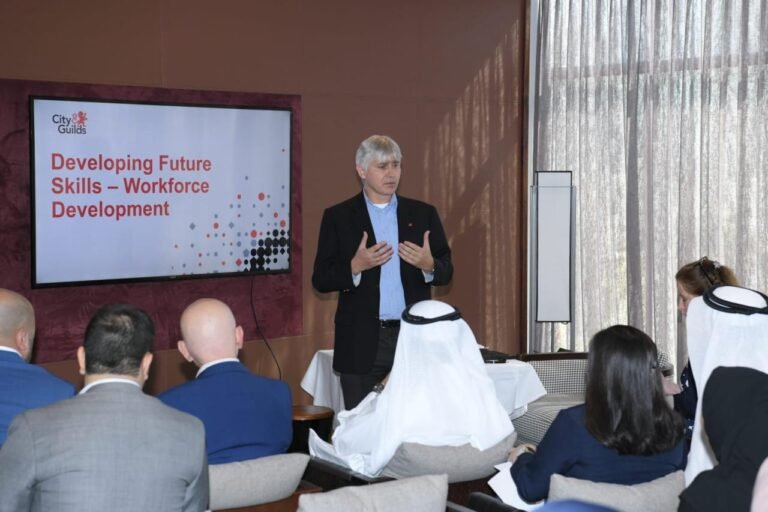
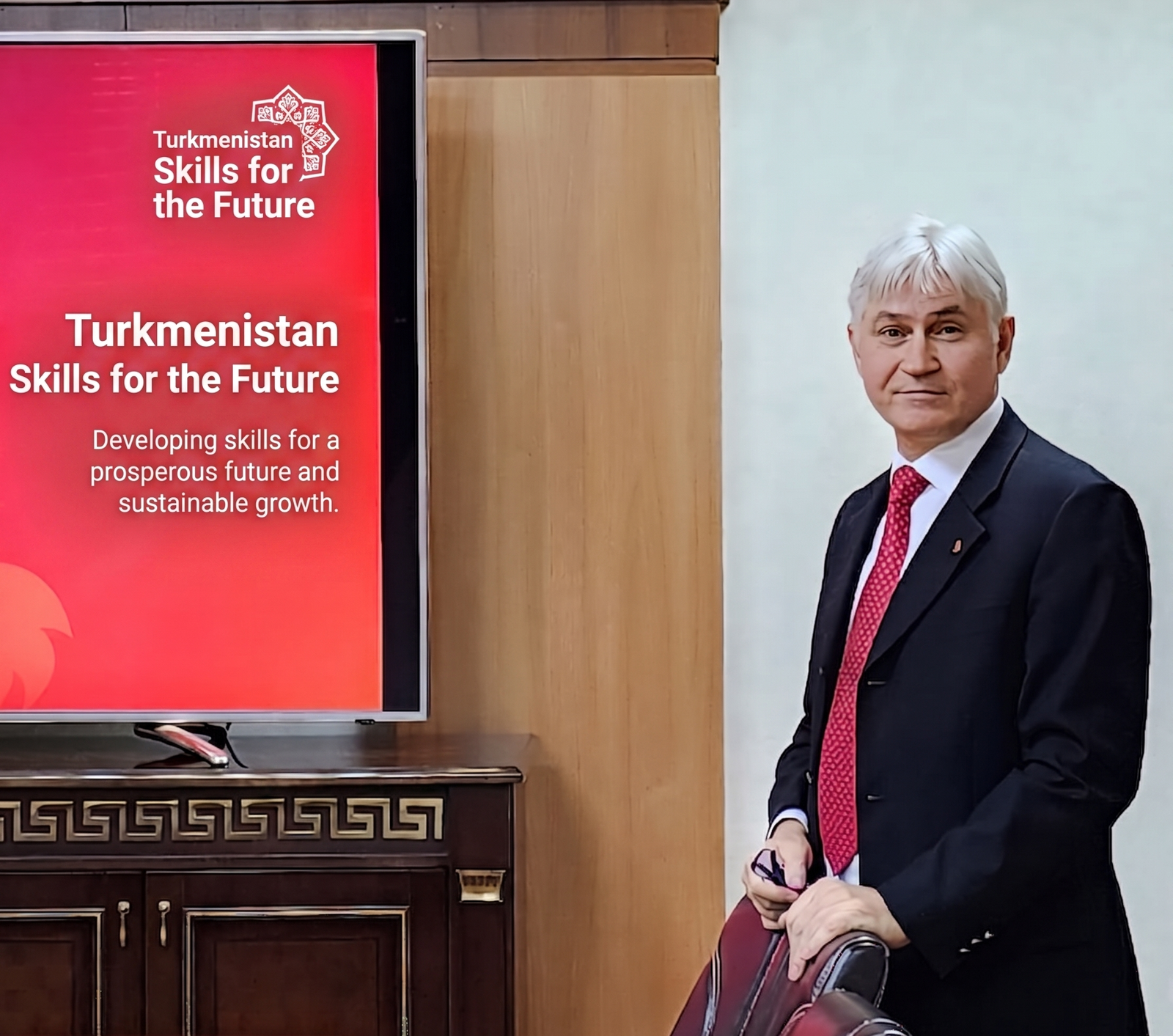
I recently had the opportunity to present a strategic skills development framework to senior stakeholders in Turkmenistan focused on the theme “Skills for the Future”. The discussion explored how nations can build sustainable workforce ecosystems capable of supporting long-term economic growth, industrial development, and national resilience.
The conversation centred on five interconnected priorities for workforce transformation and human capital development:
1. Skills Systems Must Be Driven by Economic Strategy
National qualifications, technical education programmes, and workforce initiatives should not exist in isolation. They must be directly linked to economic priorities, industrial development plans, and future labour market demand.
Countries that successfully diversify their economies typically establish strong mechanisms connecting government, employers, training providers, and qualification bodies. This alignment is foundational to any national skills strategy and vocational education reform.
2. Quality Matters More Than Volume
Expanding access to training is important, but quality assurance remains critical. A national skills strategy built on volume alone — without rigorous standards — creates a false sense of progress.
Employers need confidence that qualifications genuinely represent competence. This requires:
- Occupational standards developed with industry input
- Industry-led assessment processes
- Independent quality assurance mechanisms
- Robust certification and qualifications reform systems
- Continuous review and improvement cycles
Without these foundations, qualifications risk becoming administrative rather than meaningful indicators of capability. Strong qualifications reform is essential to building employer trust and labour market relevance.
3. Teachers and Trainers Are the Multipliers
One of the most effective approaches to national skills reform is investing in educators. A TVET system is only as strong as the trainers delivering it.
Experience across the Middle East and North Africa has shown that building local trainer capability creates sustainable long-term impact. Strong teaching, modern assessment practices, and competency-based delivery models can transform learner outcomes at scale.
Investing in educator quality is one of the highest-return activities in any workforce development strategy. It builds local capacity, reduces dependency on imported expertise, and ensures programmes remain current with evolving industry needs.
4. Digital and Future Skills Are No Longer Optional
Across all sectors, digital capability is becoming a baseline expectation for employability and economic participation.
Future workforce strategies increasingly require:
- AI awareness and applied digital skills
- Digital literacy across all occupational areas
- Data skills and analytical thinking
- Technology-enabled learning environments
- Continuous upskilling pathways for existing workers
The challenge is ensuring these future skills are embedded across programmes rather than treated as standalone subjects. Effective integration requires curriculum redesign, trainer upskilling, and employer engagement.
5. Turkmenistan Skills Development as a National Competitiveness Strategy
Skills policy should be viewed as economic infrastructure — as fundamental to national growth as roads, ports, and energy networks.
Countries investing in workforce capability through TVET reform and human capital development — as highlighted by the World Bank’s skills development research — create stronger foundations for:
- Foreign direct investment and private sector growth
- Productivity growth and industrial competitiveness
- Employment creation and labour market alignment
- Innovation and technology adoption
- Social mobility and inclusive economic growth
The most successful national systems align education, industry, and economic development around a shared vision for future growth. Economic diversification cannot succeed without a parallel national skills strategy.
Looking Forward: Workforce Transformation and National Resilience
The discussion in Turkmenistan reinforced a trend increasingly visible across the region: governments are placing workforce development and Turkmenistan skills development at the centre of national transformation agendas.
As economies evolve, the ability to develop agile, competent, and work-ready talent will become one of the defining factors of national competitiveness. The lessons from the Bahrain Employability Initiative and similar programmes across the region consistently reinforce this point: skills investment creates measurable economic returns.
The future belongs to countries that invest not only in infrastructure and technology, but also in the skills, capabilities, and potential of their people. Nations that embed workforce transformation into their national economic strategies will be better positioned to attract investment, create employment, and build resilient, diversified economies.
Dr Tony Degazon is a specialist in vocational education, workforce transformation, qualifications development, and skills policy, with experience supporting governments, employers, and education systems across the Middle East, North Africa, and Central Asia. View speaking engagements and presentations.